
What Is Public History?
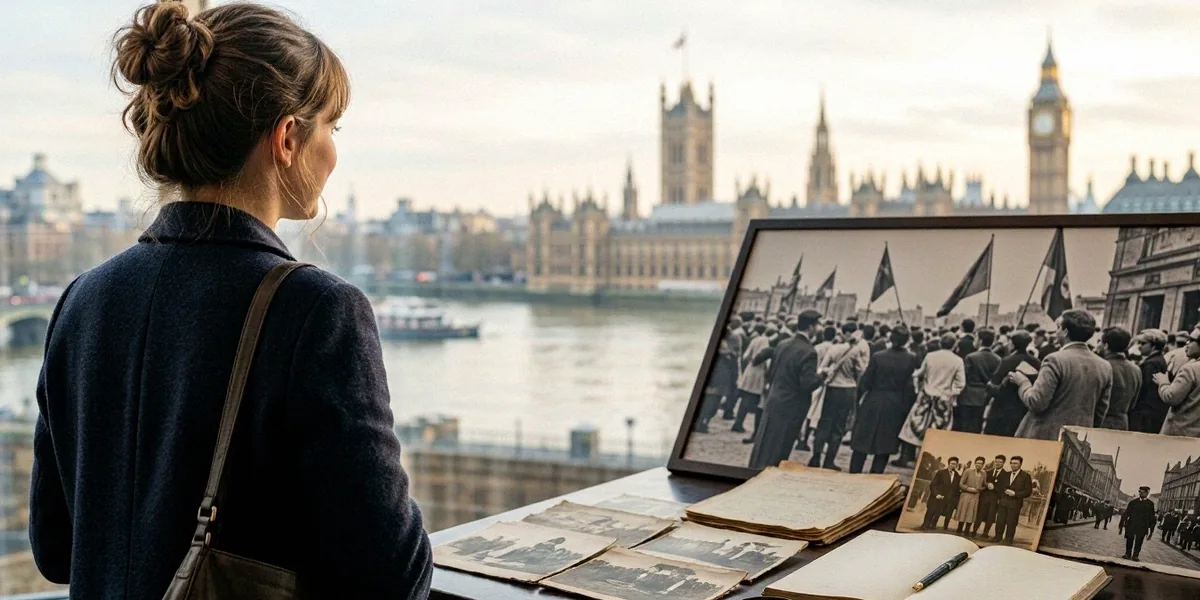
Public history is one of those phrases that sounds self-explanatory until you try to define it. Surely it just means history presented to the public — museums, plaques, documentaries, that sort of thing? That reading gets the audience right but the method wrong. Public history is not simply history for the public; it is history done with the public. It is a practice, a set of methods, and a way of working that takes the past out of the seminar room and into the messy, contested, deeply human spaces where people actually live with it. On this blog, that distinction matters, because it shapes everything from how we visit a heritage site to how we judge the label text on a museum wall.
Defining Public History: More Than Just History for the Public
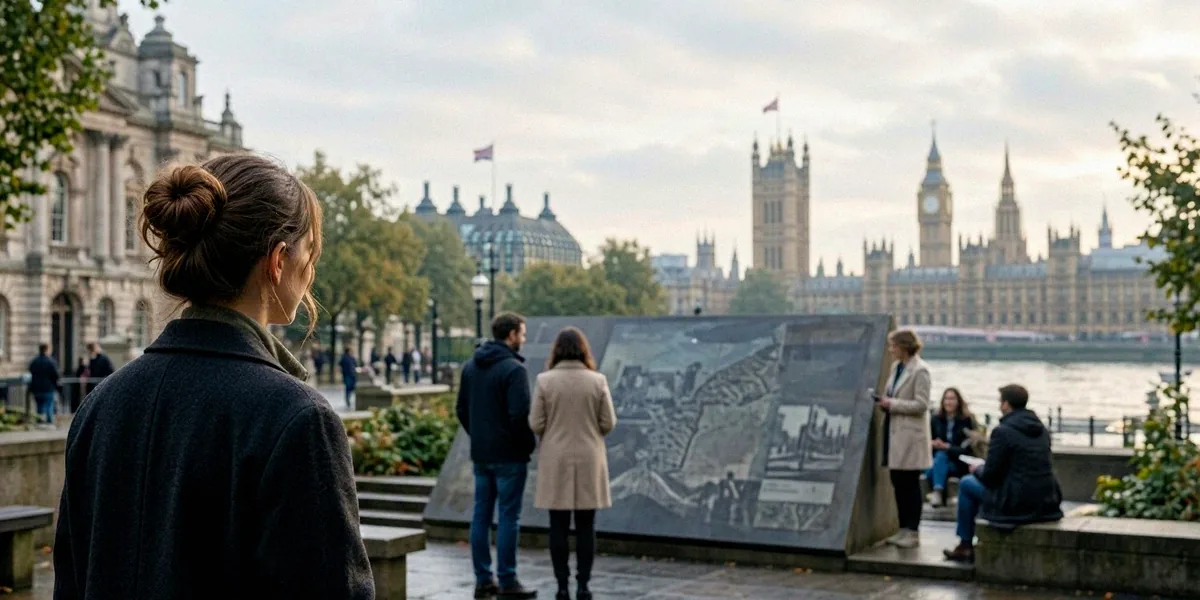
The term itself is usually traced to the American historian Robert Kelley, who coined it in the 1970s to describe the growing number of historians working outside universities — in government, archives, museums, and consultancies. Kelley’s point was not that this work was lesser than academic history, but that it demanded different skills: collaboration, communication, and an awareness of audiences who had not chosen to sit an exam on the subject.
In practice, public history is the practice of history outside academia, carried out in partnership with communities and institutions. In the UK, that means organisations like the National Trust, which cares for hundreds of historic properties across England, Wales, and Northern Ireland, and English Heritage, which looks after sites ranging from Hadrian’s Wall to the Iron Bridge. A public historian might be a curator, an oral history interviewer, a heritage consultant, a digital content producer, or a community organiser — often several of these at once.
The Origins of Public History in the UK and US
The field developed differently on each side of the Atlantic. In the United States, public history programmes multiplied from the late 1970s onwards, often tied to government agencies and the National Park Service. In the UK, the tradition grew out of adult education, local history societies, and the postwar museum boom, later formalised through university courses and professional bodies. The impulses were similar: historians wanted their work to matter beyond the campus, and institutions needed people who could translate research into exhibitions, trails, and interpretation.
How Public History Differs from Academic History
Academic history typically addresses peers and is judged by the standards of the discipline — originality of argument, rigour of sourcing, contribution to a field. Public history addresses audiences who may have no professional stake in the subject at all, and it is judged by whether it informs, moves, or provokes them without misleading them. The research can be just as rigorous, but the outputs differ: a walking tour, a podcast series, a co-curated exhibition, a conservation plan. Public historians also work under constraints academics rarely face, from planning regulations to donor expectations to the simple fact that a historic house has to stay standing.
Where Public History Happens: From Historic House Museums to Heritage Sites
Public history is site-specific. It happens in buildings, landscapes, and now screens. Some of the most interesting work takes place in historic house museums — domestic spaces that ask visitors to imagine daily life rather than admire monumental architecture. Benjamin Franklin House in London, the only surviving home of the American statesman, is a good example: a Georgian townhouse that interprets Franklin’s years in the city through a combination of conservation, performance, and historical research. Heritage sites operate at a different scale, and national parks and landscapes bring in questions of access, ecology, and rural economy. In the UK, the Museums Association and the Heritage Alliance both play significant roles in shaping how this sector works, from workforce standards to advocacy with government.
Historic House Museums and Their Interpretive Challenges
Historic houses are seductive and difficult in equal measure. They offer atmosphere, objects, and intimacy, but they also tend to preserve the perspective of the wealthy family that lived there. Interpreting the servants, tenants, and enslaved people connected to such properties requires deliberate research and often uncomfortable conversations with visitors who came for the furniture. The best house museums now treat interpretation as an argument rather than a description.
Heritage Sites and the Politics of Preservation
Every preservation decision is a choice about whose past survives. Stonehenge is a World Heritage Site visited by over a million people a year, yet its management involves constant negotiation between archaeologists, druid communities, transport planners, and local residents. Similar tensions play out at industrial sites, battlefields, and country houses. Preservation is never neutral; it is public history with a budget and a planning committee.
Digital Public History: Museums Online
The digital turn has expanded the field enormously. Online collections, virtual tours, and social media interpretation now reach audiences who may never visit in person. This is genuinely democratising, but it also raises questions about accuracy, context, and the loss of the physical encounter that gives objects much of their power. A well-made digital exhibition can do things a gallery cannot; a poorly made one simply flattens the past into content.
Why Public History Matters: Memory, Identity, and the American Revolution
Public history shapes national narratives. It decides which events are commemorated, which figures are statues, and which stories are taught as foundational. The American Revolution is a particularly revealing case study, because it means something quite different depending on where you encounter it. In the United States, it is origin myth and political touchstone. In Britain, it is often a footnote to a larger imperial story — or, more interestingly, a subject interpreted for British audiences through institutions like the American Museum in Britain near Bath, which holds one of the most significant collections of Americana outside the United States.
The American Revolution in British Public Memory
British heritage sites have become more willing to engage with the revolution as something other than a defeat. Exhibitions now explore the war’s global dimensions, the experiences of loyalists and enslaved people, and the ways in which the conflict reshaped Britain itself. This is public history doing what it does best: taking a familiar event and showing how it looks from another shore.
Contested Histories and Inclusive Interpretation
Contested history is not a problem to be solved but a conversation to be had well. Inclusive interpretation means asking who has been left out of the story and why, and then doing the research to bring them back in. It means consulting communities before writing about them. It means accepting that some visitors will disagree, and that disagreement, handled honestly, is a sign the interpretation is working.
Public History and Museum Studies: Skills, Ethics, and Careers
Public history and museum studies overlap heavily, and in the UK the connection is formalised through programmes such as the University of Leicester’s museum studies courses, which have trained generations of sector professionals. A public history career might begin in a museum, an archive, a heritage consultancy, a local authority, or a community organisation. The skills are portable, but the ethics are not optional.
Key Skills for Public Historians
- Research and source criticism, applied to non-academic formats
- Interpretation and writing for diverse audiences
- Community consultation and co-production
- Project management, budgeting, and fundraising
- Digital production, from cataloguing to content design
- An ability to handle disagreement without defensiveness
Ethical Dilemmas in Heritage Work
Ethics sit at the centre of the field. Repatriation of human remains and cultural objects, consultation with descendant communities, and the representation of slavery and empire all demand careful judgement. The Museums Association’s Code of Ethics is the key UK reference point here, setting out expectations around collections, access, and public accountability. It is not a rulebook that resolves every case, but it establishes that heritage work carries obligations beyond the institution’s own interests.
How We ‘Do’ Public History: Our Approach on This Blog
Our method on this blog is straightforward. We visit sites in person and pay attention to the details — label text, layout, staffing, gift shop, café, the things that shape how history actually lands. We interview practitioners, from curators to front-of-house staff, because the people doing the work usually know the problems best. And we offer opinionated analysis, because neutral description helps nobody. Expect upcoming posts on UK heritage sites, historic house museums, and the awkward questions that interpretation tends to raise.
Public history, in the end, is a collaborative and ongoing conversation. It asks who owns the past, who gets to speak about it, and who is expected to listen. Everyone is invited to that conversation — and everyone, whether they realise it or not, is already part of it.
FAQ
What is public history in simple terms?
Public history is history practised outside universities and in collaboration with the public — in museums, heritage sites, archives, and community projects. It is defined by its methods and partnerships, not just by the fact that non-specialists see the results.
Is public history the same as museum studies?
No, though they overlap. Museum studies focuses on the theory and practice of museums specifically, while public history covers a wider field including heritage sites, oral history, policy work, and digital projects. Many professionals train in both.
Why is the American Revolution relevant to UK heritage sites?
Because it reshaped Britain as much as America, and because British audiences encounter it through institutions such as the American Museum in Britain. Interpreting the revolution from a British perspective reveals the conflict’s global and imperial dimensions.
What role does the Museums Association play?
The Museums Association sets professional standards for the UK sector, including its Code of Ethics, and advocates for museums and their workforces. It is a key reference point for anyone working in public history and heritage.
Can I work in public history without a degree?
Yes, though routes vary. Volunteering, apprenticeships, and entry-level roles in heritage organisations like the National Trust or English Heritage can lead to substantive careers, often alongside part-time study or professional development.