
The Future of Historic House Museums: A Public History Perspective
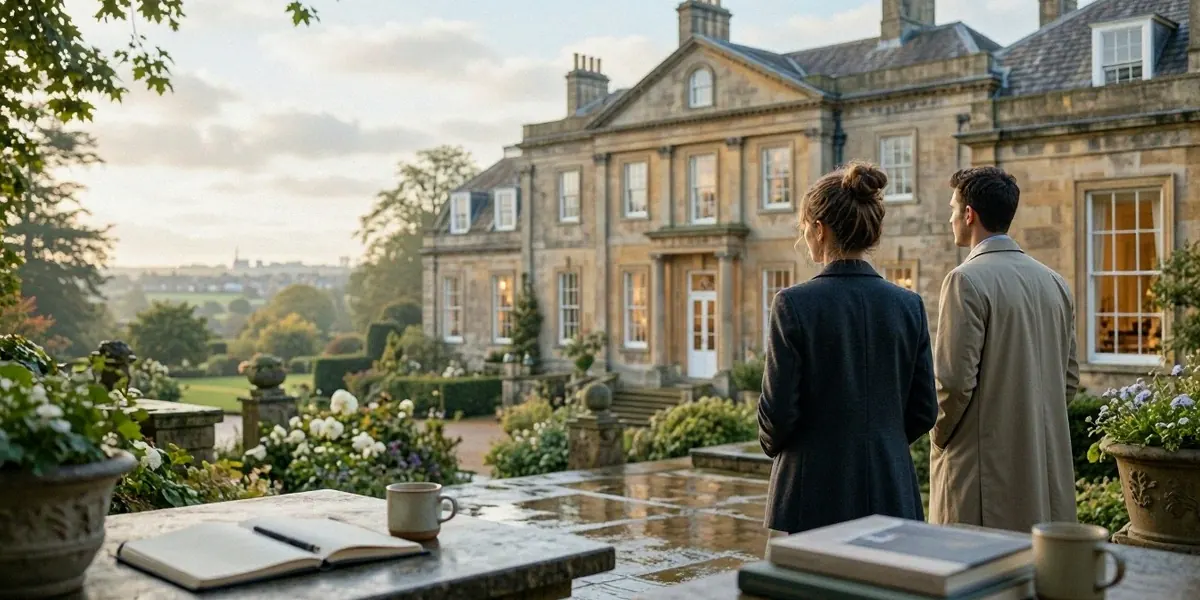
Can historic house museums survive without radical change? It’s a question we found ourselves asking repeatedly during a recent visit to a National Trust property in the West Country, where the tearoom was bustling but the state rooms felt eerily quiet. The volunteers were knowledgeable, the collection was exquisite, and yet the experience felt stuck in amber — preserved rather than alive. If the sector’s most well-resourced operator is grappling with relevance, what hope is there for the hundreds of smaller houses dotting the British Isles? As public historians, we think the answer lies not in nostalgia but in discomfort, experimentation, and a willingness to tell harder truths.
Why Historic House Museums Are at a Crossroads
The numbers don’t lie. Visitor figures across the UK heritage sector have been uneven since the pandemic, with many independent properties still operating below 2019 levels. The National Trust’s 2023 reporting on shifting audience expectations made for sobering reading: audiences increasingly want relevance, interactivity, and narratives that connect to their own lives, not just a parade of mahogany and portraits. COVID-19 didn’t create these pressures — it accelerated them, exposing how fragile the funding models of many heritage sites really are.
The Financial Squeeze on Independent Museums
Independent museums and historic houses operate on razor-thin margins. Unlike the big nationals, they rarely have endowments to fall back on. Rising energy costs hit older buildings disproportionately, and staff retention has become a genuine crisis. The Historic Houses Association has repeatedly warned that many of its member properties are one bad winter away from closure. Grants from bodies like the National Lottery Heritage Fund remain vital, but competition is fierce and reporting requirements are onerous for volunteer-led operations.
Changing Visitor Demographics and Expectations
The audience walking through the door today is not the audience of 1995. They’re younger, more diverse, and often more sceptical of grand narratives about empire and aristocracy. They expect accessibility, both physical and intellectual. They want to know who built the house, who cleaned it, and whose labour was extracted to fund it. Museums that ignore this shift risk becoming irrelevant — or worse, actively off-putting.
Reinterpreting the American Revolution in UK Context
Here’s a topic close to our hearts. The American Revolution is often framed as a purely American story, but its roots run deep through British soil. Benjamin Franklin House in London, the only surviving Franklin residence, has done genuinely interesting work rethinking how it presents its famous occupant. Rather than simply celebrating Franklin as a Founding Father, the house now engages with his complicated positions on slavery, his long absences from his family, and the transatlantic world that shaped him.
Beyond Founding Fathers: Enslaved and Indigenous Voices
The broader movement in museum studies has been to decentre the great men. At properties connected to the Revolution — whether in London, Bristol, or the Scottish estates that profited from colonial trade — curators are increasingly asking whose stories were erased. Enslaved people, Indigenous communities, and women whose contributions were dismissed as domestic are now being written back into interpretation. This isn’t about guilt; it’s about accuracy.
Transatlantic Connections and Local Audiences
We think there’s untapped potential in connecting UK audiences to American Revolution history through local angles. A merchant’s house in Liverpool, a plantation-linked estate in the Caribbean, a Quaker meeting house in Yorkshire — these are entry points that make the Revolution feel immediate rather than distant. The challenge is funding the research and training the volunteers to deliver these narratives with confidence.
Innovative Approaches from Museum Studies
The National Trust’s ‘People’s Landscapes’ project is one of the more interesting experiments in recent years, using community-led research to surface hidden histories of place. The Museum Association’s 2024 conference themes leaned heavily into co-curation, decolonisation, and digital innovation — signals that the sector knows it needs to change, even if the pace feels glacial at times.
Co-Curation and Community Engagement
Co-curation is more than a buzzword. Done properly, it means sharing authority with community groups — not just consulting them after the labels are written. Some houses have invited local residents to select objects, write interpretation, and even shape the layout of displays. It’s messy, slow, and often uncomfortable for curators trained in traditional hierarchies. It’s also the most promising route to genuine relevance.
Digital Storytelling and Immersive Technologies
We’re cautiously optimistic about digital tools. Well-executed augmented reality can bring a ruined wing back to life without a single brick being laid. Podcasts, virtual tours, and interactive archives extend reach far beyond the physical site. But we’ve also seen plenty of gimmicky apps that add nothing to the visitor experience. The rule should be simple: does the technology deepen understanding, or does it just look clever?
Case Studies: Successes and Struggles in the UK
Let’s ground this in specifics. Three examples illustrate the range of what’s possible — and what’s at stake.
- Wentworth Woodhouse in South Yorkshire: a staggering restoration effort that has turned a near-ruin into a thriving visitor attraction and community hub.
- Museum of the Home in East London: a bold redevelopment that reimagined what a domestic history museum can be, with mixed results.
- Smaller Historic Houses Association properties: the backbone of the sector, increasingly reliant on ageing volunteers and facing an uncertain future.
Wentworth Woodhouse: A Restoration Success Story
Wentworth Woodhouse is proof that even the most daunting projects can succeed. The house — one of the largest in Europe — was on the brink when the Wentworth Woodhouse Preservation Trust took it on. Through a combination of heritage grants, commercial hire, and relentless fundraising, it has become a genuine asset to the local area. The lesson? Ambition, governance, and diversified income streams matter enormously.
Smaller Houses and the Volunteer Dilemma
The story is very different for the hundreds of smaller properties in the Historic Houses Association. Many rely almost entirely on volunteers, and that volunteer base is ageing. Younger people are willing to help but often want flexible, meaningful roles rather than traditional stewarding. Houses that adapt their volunteer programmes are surviving; those that don’t are quietly closing rooms and reducing opening hours.
What We Think the Future Holds
We’re not neutral observers. Here’s our forecast, offered with the caveat that nobody really knows what the next decade will bring.
The Rise of the ‘Phygital’ House Museum
Hybrid physical-digital experiences — ‘phygital’, if you’ll forgive the jargon — will become standard. Expect houses where a smartphone tour unlocks archival audio, where a QR code leads to a descendant’s testimony, and where the on-site visit is one part of a longer digital relationship. The American Revolution museum sector has been ahead of the curve here, and UK heritage would do well to study its examples.
Funding Beyond Grants: Social Enterprise and Partnerships
Grant dependency is a trap. The houses that thrive will be those that build social enterprise arms — cafés, event hire, publishing, training — and forge genuine partnerships with universities, tech firms, and community organisations. UK heritage policy is slowly catching up, but the sector can’t wait for Whitehall to save it.
FAQ
What is a historic house museum?
A historic house museum is a property preserved and interpreted for the public because of its architectural, cultural, or historical significance. It might be a grand country estate, a modest townhouse, or a former home of a notable figure. Interpretation usually combines the building, its collections, and the stories of the people who lived and worked there.
Why are historic house museums struggling in the UK?
Several factors converge: declining visitor numbers post-COVID, rising maintenance and energy costs for old buildings, an ageing volunteer base, and shifting audience expectations. Many independent properties lack the endowments or commercial income of larger nationals, leaving them vulnerable to even small financial shocks.
How is the American Revolution relevant to UK heritage sites?
The Revolution was a transatlantic event. British merchants, politicians, military figures, and enslaved and Indigenous people were all entangled in it. UK houses connected to colonial trade, dissenting religious communities, or figures like Benjamin Franklin offer rich opportunities to explore the Revolution from British and global perspectives.
What is co-curation in museums?
Co-curation is a practice where museums share authority with community groups, descendants, or other stakeholders in shaping exhibitions, interpretation, and programming. It moves beyond consultation to genuine collaboration, and it often surfaces histories that traditional curatorial approaches have overlooked.
Can digital technology really save historic house museums?
Not on its own. Digital tools can extend reach, deepen interpretation, and attract new audiences, but they can’t replace the fundamental work of good governance, diversified funding, and compelling storytelling. Technology is a tool, not a strategy.
Historic house museums in the UK stand at a genuine inflection point. The ones that will survive — and thrive — are those willing to embrace discomfort, reinterpret their collections honestly, and experiment with new models of funding and engagement. Public historians have a responsibility to lead that charge, not just document the decline. The houses that tell the hardest truths, and tell them well, will be the ones still standing when the dust settles.