
Apps and Games at Heritage Sites: How Digital Play Is Reshaping Public History
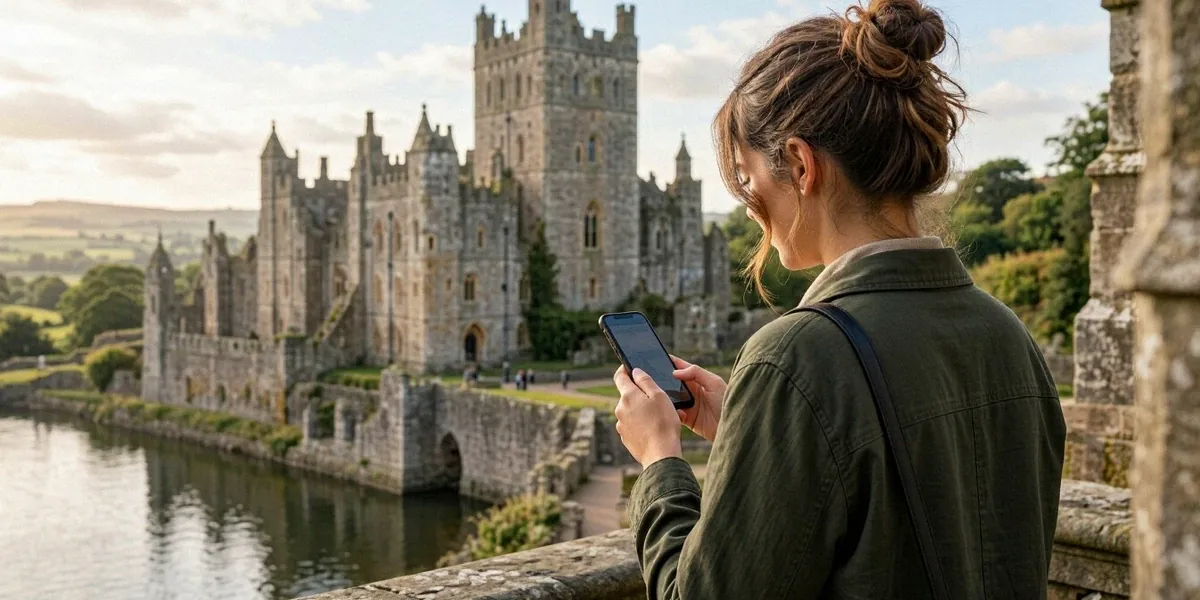
A family stands in the shadow of a ruined abbey in North Yorkshire. The walls are waist-high, the roof long gone, and the interpretation board is faded. Then a ten-year-old raises a phone, and the abbey reassembles itself on screen: arches, windows, chanting monks. The parents lean in. Nobody is looking at the interpretation board anymore. We have watched scenes like this at heritage sites across the UK, and it left our team with an uncomfortable, genuinely interesting question: does this count as real public history, or is it just a very expensive screensaver?
Why Heritage Sites Are Betting on Apps and Games
The shift towards digital play is not a fad dreamed up by marketing departments. It is a response to two hard realities that anyone working in the sector will recognise: visitor expectations have changed, and the money to meet them has not.
The Visitor Engagement Problem
Historic house museums and heritage sites have a well-documented engagement challenge. A preserved Georgian drawing room is beautiful, but it is also static, silent, and often roped off. English Heritage’s augmented reality app at Stonehenge is a direct answer to this: visitors can see the stones as they may have stood in the Neolithic period, with the monument re-erected on their phone screen. The National Trust has taken a similar route with interactive trails at properties like Bodiam Castle, where families follow challenges around the moat and ruins rather than simply reading panels. These are not gimmicks bolted on for their own sake — they are attempts to give visitors something to do while they look.
Funding and the Digital Turn in Museum Studies
There is also a funding story here. Grant bodies increasingly expect digital outputs, and museum studies programmes have spent the past decade arguing that interpretation is not a neutral act. If a site is going to shape how visitors understand the past, the argument goes, it may as well do so deliberately and well. Digital tools offer a way to layer multiple interpretations onto a single site — something a printed panel cannot do.
From Audio Guides to Augmented Reality: A Short History
None of this arrived overnight. Digital interpretation has a lineage, and understanding it helps explain why some projects feel natural and others feel forced.
The Audio Guide Era
The first wave was audio. A narrated tour, a numbered route, a headset. It was revolutionary in its day and remains genuinely effective — audio guides let visitors move at their own pace and hear from curators, historians, and sometimes first-person re-enactors. But they are fundamentally passive. You listen; you do not act.
Location-Based Games and the Pokémon Go Effect
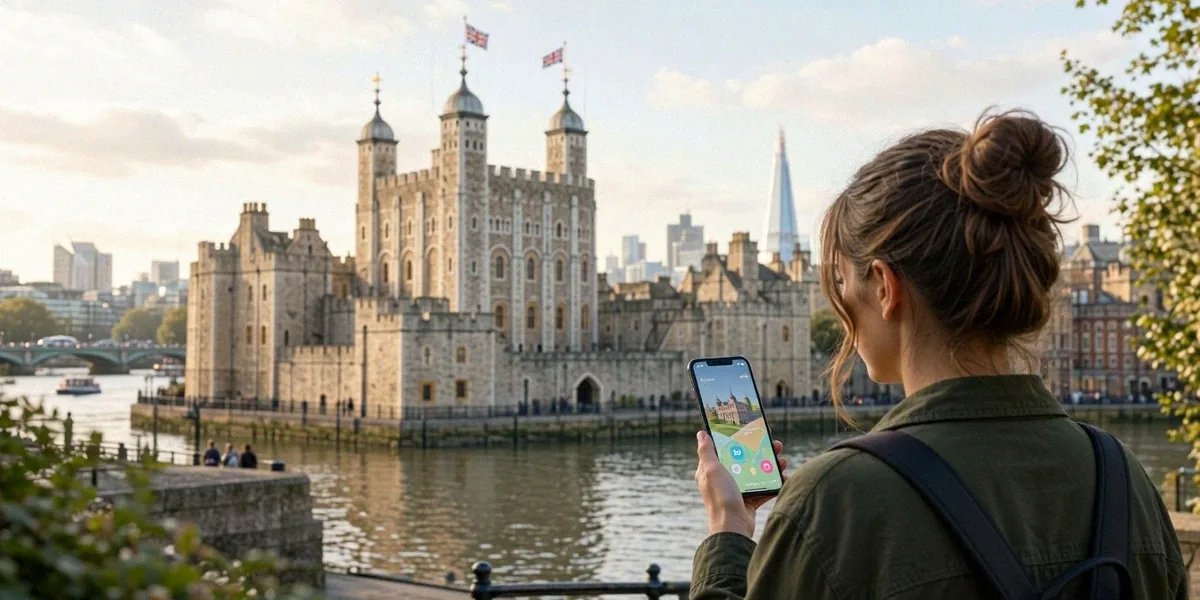
The second wave was locative play. When Pokémon Go sent millions of people wandering through churchyards, town squares, and heritage sites in 2016, the sector sat up. Historic Royal Palaces ran a Minecraft experience at the Tower of London, letting younger visitors rebuild and explore the fortress in a blocky digital world. Colonial Williamsburg, meanwhile, has experimented with apps that place the American Revolution directly in visitors’ hands, layering eighteenth-century context onto the streets they are walking. The lesson was clear: people will happily engage with place-based digital content if it gives them agency.
Case Studies: What Works and What Feels Gimmicky
We have tried a lot of these. Some are excellent. Some make us wince.
The Roman Baths: Playful Learning Done Well
The Roman Baths in Bath offers an interactive game that lets visitors explore the site’s history through play without dumbing down the archaeology. The mechanics connect to the actual remains — the springs, the bathing sequence, the social rituals — so the game reinforces what you are standing next to. That is the gold standard: the digital layer and the physical site explain each other.
When the Tech Overshadows the History
The opposite happens more often than the sector admits. The American Revolution Museum at Yorktown’s augmented reality siege experience is ambitious and technically impressive, but we have watched visitors spend more time fighting the interface than thinking about the siege itself. When the technology becomes the attraction, the history becomes set dressing. That is a real risk, and it is worth naming.
The Public History Debate: Education or Entertainment?
This tension is not new, but digital play has sharpened it considerably.
What Counts as Public History?
Museum studies journals have argued for years about edutainment — the fear that entertainment values will crowd out scholarly interpretation. The debate plays out vividly at sites like Independence Hall, where the American Revolution’s contested memory is not an abstraction but a live political question. If a game simplifies that contest into a binary of heroes and villains, it has not interpreted history; it has replaced it.
The Risk of Gamifying Trauma
Some histories should not be turned into point-scoring exercises. Battle re-enactments, plantation sites, sites of massacre — these require care. A leaderboard is not an appropriate response to human suffering. Our view is that games can handle difficult history, but only when the design team has thought seriously about what the mechanics are saying, not just what they are showing.
Designing Better Heritage Games: Lessons for the Sector
So what should heritage professionals actually do? A few practical principles stand out from the projects that work.
- Start with the story, not the technology. Decide what interpretation the site needs, then ask whether an app is the right tool.
- Co-design with historians and players. English Heritage’s ‘Operation Spy’ at Dover Castle works because the game mechanics serve the site’s Cold War narrative, not the other way around.
- Test with real visitors. Families, school groups, and older visitors will break your assumptions fast.
- Plan for maintenance. An app that stops working in three years is a worse investment than a well-made panel.
Co-Design with Historians and Players
The best projects we have seen involved historians, game designers, and local communities from the start. Community co-design matters especially at sites where the history is contested or where local memory diverges from the official interpretation.
Accessibility and Inclusivity in Heritage Tech
Digital play can exclude as easily as it includes. Not every visitor has a smartphone, reliable data, or the dexterity for a touchscreen game. Any heritage app worth funding needs an offline mode, clear text alternatives, and a plan for visitors who simply want to look at the stones.
What We Want Next: Our Team’s Wishlist
We are optimistic about this space, but we have opinions.
More Stories from the Margins
Too many heritage games retell the same stories. We want to see digital play built around the histories that have been sidelined at UK heritage sites — the workers, the enslaved, the women, the migrants, the queer histories that country houses often quietly erase. The American Revolution offers a useful comparison: the most interesting recent interpretation at related sites has focused on who was excluded from the founding narrative.
Better Evaluation and Open Data
The sector needs honest evidence. Not download counts, but genuine evaluation of what visitors learned and remembered. We would also like to see more open sharing of design documents and evaluation results so that small sites are not reinventing the wheel every time.
FAQ
Do apps and games actually improve learning at heritage sites?
Evidence is mixed but cautiously positive. Well-designed games that connect mechanics to the physical site — like the interactive game at the Roman Baths in Bath — tend to improve engagement and recall. Games that are bolted on as novelty tend to be remembered as fun but not informative.
Are digital experiences replacing traditional interpretation?
No, and they should not. Panels, audio guides, and guided tours remain essential. Digital play works best as an additional layer, not a replacement, particularly for visitors who want a more active experience.
Which UK heritage sites are doing this well?
English Heritage’s augmented reality app at Stonehenge, the National Trust’s interactive trails at Bodiam Castle, and English Heritage’s ‘Operation Spy’ at Dover Castle are frequently cited as strong examples. Historic Royal Palaces’ Minecraft experience at the Tower of London also reached audiences that traditional interpretation often misses.
Is it appropriate to make games about difficult or traumatic history?
Sometimes, but only with care. The design team must consider what the mechanics imply, not just what they depict. Trivialising trauma through scoring systems or leaderboards is a real risk, and sites like Independence Hall show how contested these interpretations can be.
What should small heritage sites do if they cannot afford custom apps?
Start small. A well-made web-based trail, a QR-code audio series, or a partnership with a local university’s museum studies programme can deliver much of the value at a fraction of the cost. Maintenance planning matters more than technical ambition.
Apps and games are not a threat to public history. They are a tool — sometimes a very powerful one — for helping visitors understand a place they are standing in. The sites that succeed are the ones that prioritise thoughtful interpretation over novelty, and treat digital play as one voice in a much larger conversation about the past.